
How do we know it’s time to transform?
Wisdom and practices from our collective journeys
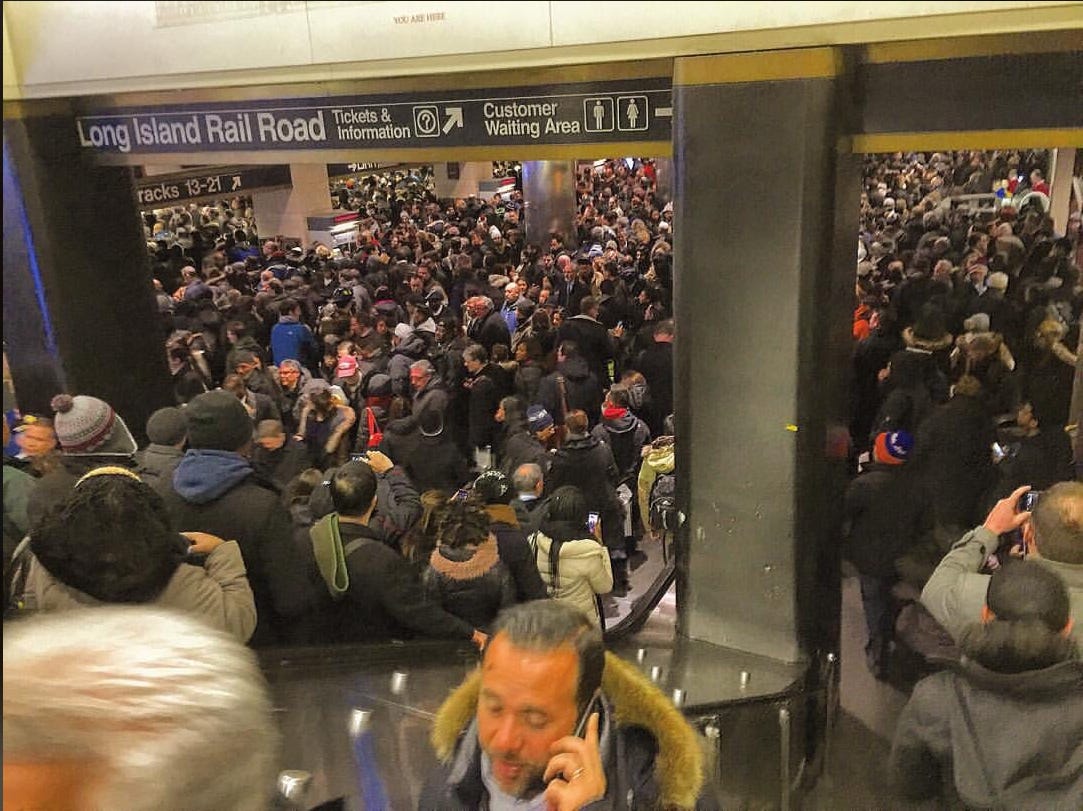
It was a pre-dawn Winter morning and I was dragging my suitcase, Starbucks in hand, body braced from the cold, through my least favorite place in New York City: Penn Station.
That’s when it came to me: I will move here.
You’d think that clarity would have emerged on a rooftop overlooking the Hudson, watching the sunset with a cocktail in hand, but no. That’s not what happened. It came in the least romantic setting possible, when I was cold and not-yet-caffeinated and just trying to get to the train.
This is how The Call works. It arrives when we least expect it—not in the moments we’ve set aside for reflection, but in the ordinary moments when our defenses are down.
What does The Call sound like?
At the time, I was living in temporary housing in Chelsea, working on a project with the Department of Education. I was at Penn Station to Amtrak my way down to Washington DC for a week of client meetings.
Meanwhile, my familiar life was waiting for me in San Francisco. To my conscious mind, I was on a 6-month adventure. To my subconscious, I was trying on a future life.
In my experience, The Call is both an emerging awareness and a discrete moment.
The Emerging Awareness
Oftentimes, the emerging awareness sounds like quiet whispers from a voice inside of you. In this cycle of transformation, I heard whispers like, “Wasn’t it nice to be close enough to family to know what they would like for Christmas?” In many transformation journeys I’ve witnessed, the whisper is a hesitant suggestion that it’s time to leave a job, but the golden handcuffs make it hard to hear.
Another way The Call arrives is through outside perspective—from a friend, a boss, a coach. As Nora shared, it was her mentors who helped her see her situation clearly enough to bolster her emerging awareness. For Henry, it was a counselor’s invitation to say out loud what he already knew—alcohol and marijuana were the most important things in his life—that allowed him to hear The Call.
For many, it is time in nature that reveals The Call. As Bristol put it, “Nature has a way of putting ideas in my head.” It makes sense that when we are connected to something larger than ourselves, de-centering the ego, we are more likely to hear The Call.
Finally, as Aaron described, The Call can arrive through what feels like pressure—positive or negative. Positive pressure might look like someone acknowledging the value of your expertise in a way that expands your sense of possibility. Negative pressure might look like unexpected envy when a friend achieves success, or awareness that you are filling a void with busy work.
This isn’t good or bad, it’s just information. As students of transformation, our only job is to notice. To listen.
The Discrete Moment
At some point, the emerging awareness crystallizes into a discrete moment.
Going back to my morning in Penn Station, the message that “I will move here” arrived after what were probably months of quiet whispers, outside perspective, and other signs and signals trying to get through to me.
When I was ready, I heard The Call.
What precipitates The Call?
As I have been studying transformation, I’ve wanted to categorize its types into neat lists with titles. Personal or Professional. Optional or Required. Identity or Context. I’ve tried every sorting mechanism I can think of.
But here’s what I’ve learned: The Call is precipitated by multiple forces aligning—internal readiness meeting external circumstances. The reality is that life is messier than neat categories suggest. There might be a lead dog, but in hindsight every transformation story I’ve witnessed demonstrates that only when internal and external forces align do we heed The Call to transform.
For example, when Mandy was reflecting on what precipitated a significant personal and professional transformation, she couldn’t point to just one thing: “Is this because of what I went through with my mom’s end of life? Is it the midlife crisis age? Or is it that I stepped off of the career treadmill for the first time in my life?
She couldn’t separate these forces. And that’s the point.
It’s not possible, or even worthwhile, to pull these forces apart. Our lives are a complex web, and no change happens in a vacuum.
But let’s assume that we have more choice around some cycles of transformation than we do others. For Bristol, she had heard The Call that her marriage needed to end during the pandemic. However, for many reasons, she felt it wasn’t a “convenient time” to get divorced.
Just as my Penn Station epiphany didn’t wait for a more fairy tale moment, Priscilla’s Call to end her marriage didn’t wait for a more convenient time. I am convinced that The Call arrives in Kairos—the Greek word for “the opportune moment.” As many recovered addicts will tell you, “I got sober in God’s time.”
When we get to the moment of The Departure, you will see how we have more agency over the timing.
I’ve heard many people lament that they missed the opportunity to transform. I relate to this regret in that I feel I have been heeding the same Call for nearly a decade.
Our job as students of transformation is to give ourselves some grace, and trust that divine timing aligns internal and external forces.
What if I don’t hear The Call?
Our brains are wired for safety. So it’s no wonder that it takes divine intervention to nudge us into the unknown.
My experience is that quiet whispers are always present—we’re just not always tuned to the right frequency. This is where practices like prayer or meditation, time in nature, journaling, and conversations with trusted outsiders matter. They help us hear what’s already trying to get through.
But here’s the other truth: sometimes we’re not meant to transform right now. Sometimes staying put is the work.
Our job as students of transformation is to discern between staying put because you’re still preparing for the adventure and staying put because you’re afraid.
How do I respond to The Call?
The Call and its response are often at play at a subconscious level. Aaron described it as “a long corridor, a preparatory phase” where he didn’t even realize he was moving toward a threshold. Like many things, only in hindsight can we see what we were up to.
In many cases, the preparatory phase presents demands that take our attention away from responding to The Call. Whether it’s the logistics of preparing for end of life, tying up the loose threads of a marriage, or creating a transition plan for your successor, The Call is often followed by very practical tasks. It reminds me of the days leading up to my son’s late arrival, and the long list of to-dos I completed—seemingly just in time.
At a soul level, we know when we can let go.
After I received The Call at Penn Station, the train ride to Washington DC—which usually felt interminable—flew by as my mind raced through everything that would need to unfold. From ending my lease in San Francisco to negotiating a move package, from sharing the news with my family and friends, to selling many of my belongings. The list was long, and it was just me I was accounting for back then!
My full response to The Call took nearly 6 months—from that cold January morning on the Amtrak train to my arrival in NYC during Pride weekend in June. I remember the timing specifically because my first full day in the West Village was overwhelmingly joyful as only a Pride weekend can be.
What I’ve noticed, and what people report, is that the distance between The Call and its acceptance shortens with experience. This looks like an internal “yes” in response to The Call, while separating the “when” and “how” into their own explorations.
Transformation moves through stages, and the first stage culminates with an internal “yes.”
Creating Tethering
Once your “yes” is clear, it’s time for another piece of shared wisdom: Create tethering for yourself before your Departure, before you enter The Sacred Dark.
Tethering includes any stabilizing force to ground you as you adventure through the unknown. Aaron, for example, took mental inventory of the aspects of his life that would remain unchanged, from his marriage to his community. Bristol knew she could lean on her family and the alumni network for support. At the time, I had my professional identity as an anchor even as my geography shifted.
Other practices for tethering include: anticipating potential destabilizing changes (aging parents, menopause) that may draw your attention; revisiting or clarifying your vision or values to provide yourself a guide through the unknown; reflecting on questions to frame the journey ahead: What transformation has life been preparing me for? What new way do I want to see or experience myself?
Tethering doesn’t eliminate the unknown—it just ensures you’re not navigating it completely unmoored.
My much younger self (I moved to New York in 2010) hadn’t acquired this wisdom, but the universe was watching over me, and I was well tethered as I set out on that journey.
As students of transformation, our job is to take it one step at a time, starting with the internal response.
What does this stage of transformation look and feel like?
I’m excited to employ a new word to describe what The Call felt like: stiction.
Stiction (a portmanteau of the words static and friction) is the force that needs to be overcome to enable relative motion of stationary objects in contact. Think of it like that jar of olives that seems like it will never open and then, woah! If you’re me, you spill the olive brine.
When I learned this word, it felt like the perfect descriptor of what I often experience in the transition from The Call to The Departure. All of this built up stuck energy unleashes into momentum. The jar finally opens. The resistance breaks. And suddenly you’re not just thinking about transformation—you’re moving toward it.
I have also heard this moment described as an awakening, a sudden sense of urgency, derived from a shift in perspective. As Mandy described her newfound awareness: “Do it now. Anything you want to do, do it now.”
More dramatic shifts like this often follow altered states of consciousness, or being up close with the life and death cycle. These experiences amplify our awareness that life is short and we are unconditionally loved while we are here. From that place, heeding The Call of our inner knowing becomes not just possible but inevitable.
As students of transformation, our job is not only to tune into these experiences in our own lives, but to be a witness to these signs in the lives of those around us.
What comes next?
This may feel like a long journey, and it’s only the first stage on the universal map of transformation. But here’s what I want you to know: The Call doesn’t demand immediate action. It’s an invitation, not a deadline.
Your job right now? Simply notice. Listen. Pay attention to the whispers, the outside perspectives, the moments in nature when something shifts. The internal “yes” will come when you’re ready.
Once you’ve heard The Call and responded with that yes, once you’ve created tethering for yourself—then you’re ready for The Departure. And that, my friends, will be the subject of the next essay.
Until then: What Call might be trying to reach you? What are you not quite ready to hear?
____
Thank you to all of the people who shared their stories and experience to contribute to this essay. All names have been changed.
If you are interested in sharing your story, or getting on the list for Transformation School, please reach out.